Cat Behavior Explained: Introducing a New Kitten into the Home
It seems like it should be easy enough to introduce a new kitten to older cats, but this isn’t always the case. If you’re anything like me, you may have underestimated the difficulty such a situation can cause. Introducing a new kitten into the home can be overwhelming and a bit frustrating for everyone involved, especially if it takes more than a few days. However, I have some new kitten advice that can help ease the transition.
In this article, I cover tips for introducing cats, such as how to handle feeding schedules and playtime. Besides this, I share some anecdotal advice based on my own experience introducing a kitten to an adult cat. Be sure to sign up for my Cat Mom Life newsletter here for more great cat care guides and tips for giving your furbaby their best life!
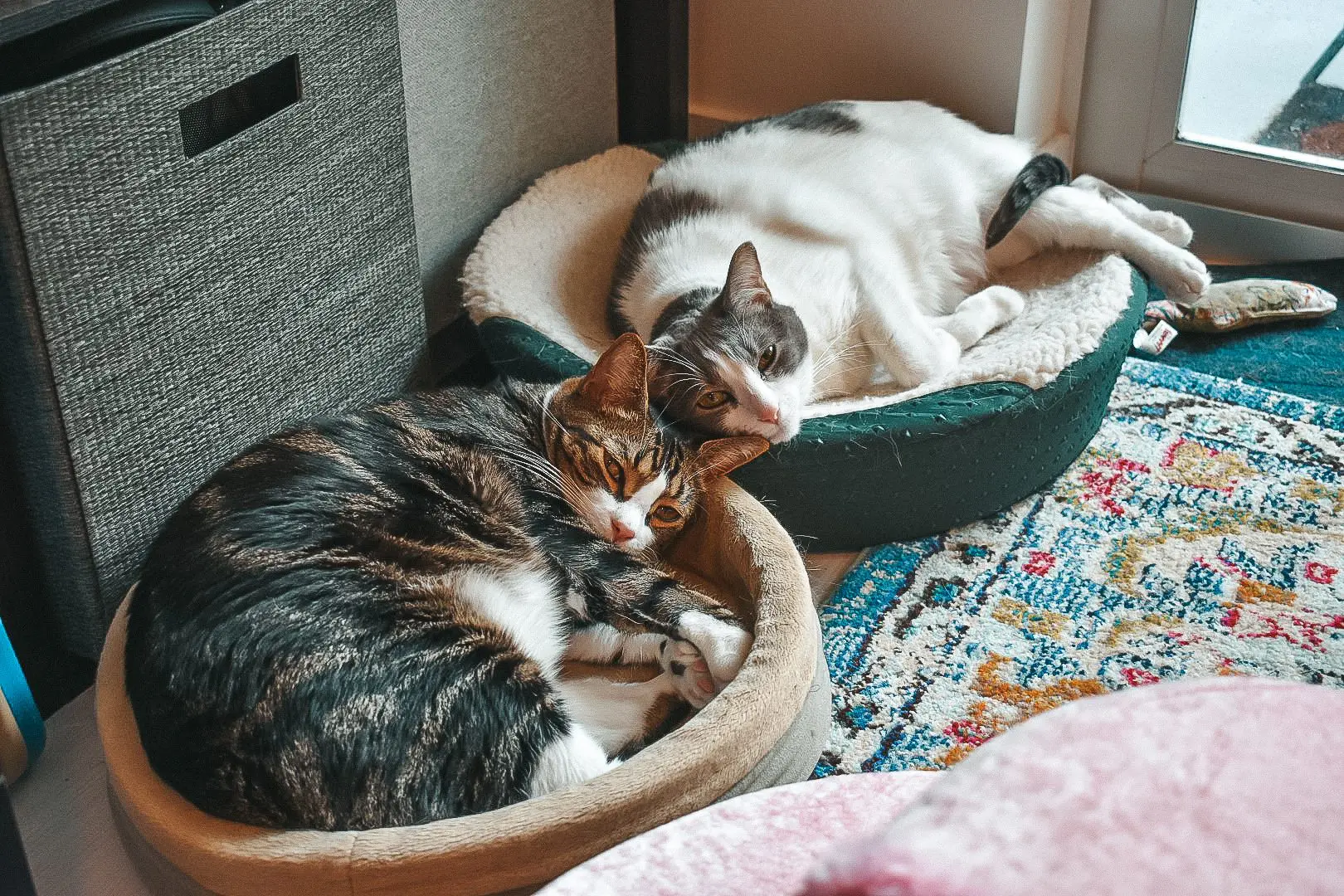

Whether you’re adopting your first cat or adding to your clowder,
my Cat Care Guide covers everything you need to know about giving your cat their best life!
Check out my full Cat Care Guide here!
Table of Contents:
Shop Our Top Pet Essentials
My Experience Introducing a New Kitten to Older Cats
My husband and I have three cats — I brought two cats (Louis and Olivia) to the relationship and he brought one (Emory). When I adopted my second cat, Olivia, I wasn’t really worried about how she and Louis would interact. Really, I was mostly worried that, because Olivia was so small, Louis might inadvertently hurt her if they wrestled or he played too rough. Besides that, though, I never really worried about them not liking each other. Louis had gotten along just fine with other cats in my life. Luckily, Louis and Olivia took to each other straight away. Sometimes, introducing a new kitten to an older cat is no trouble at all.
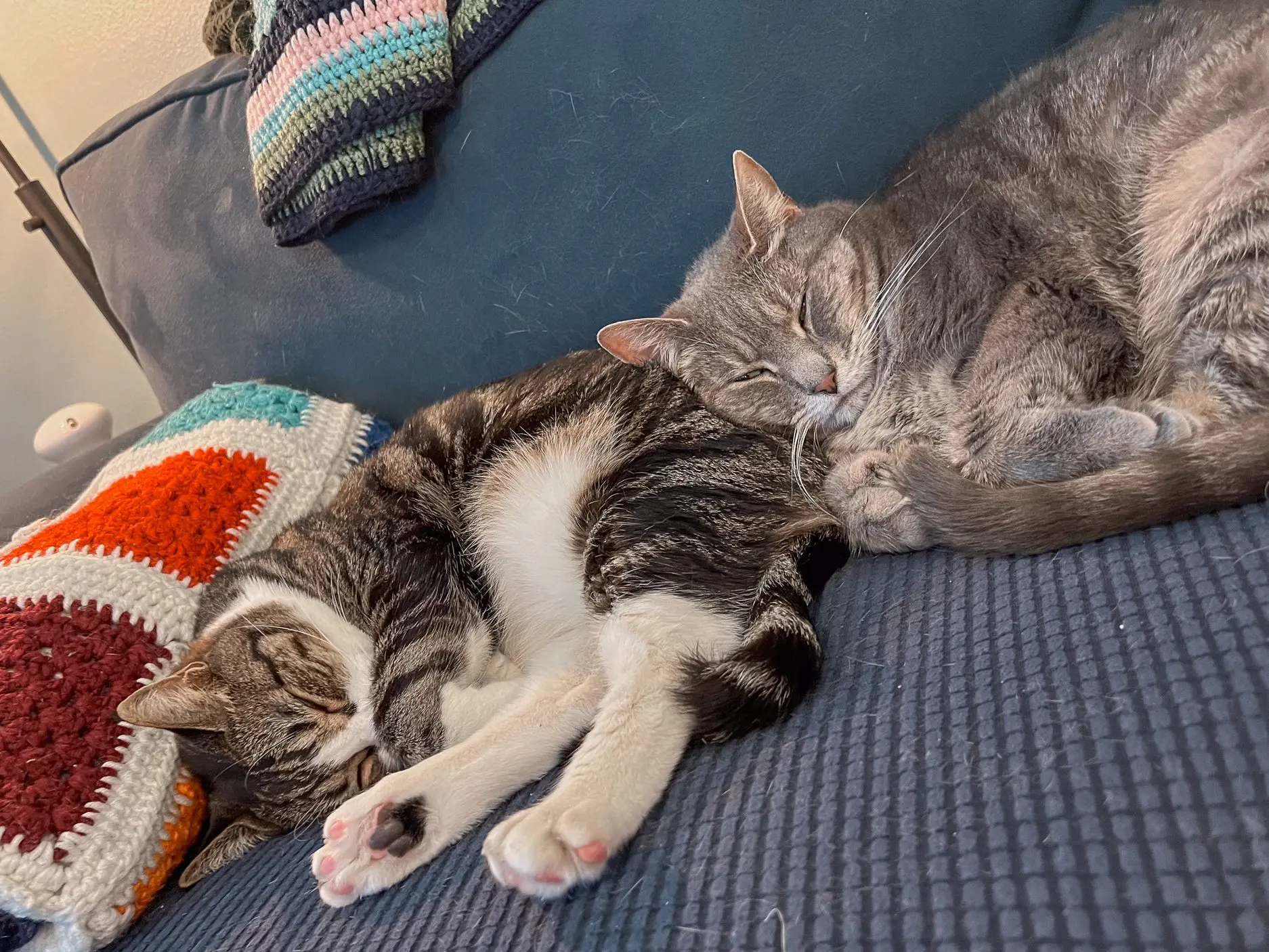
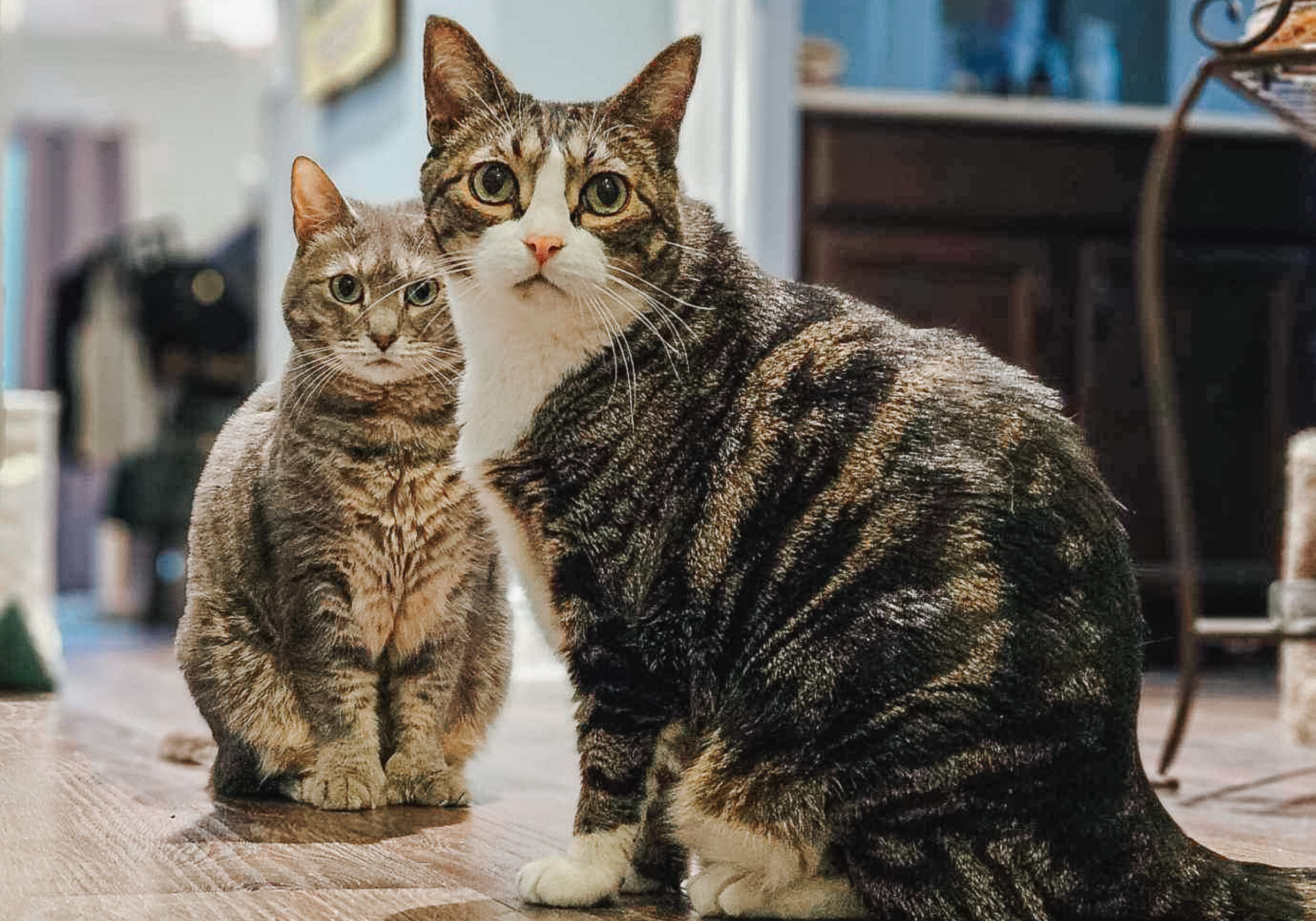
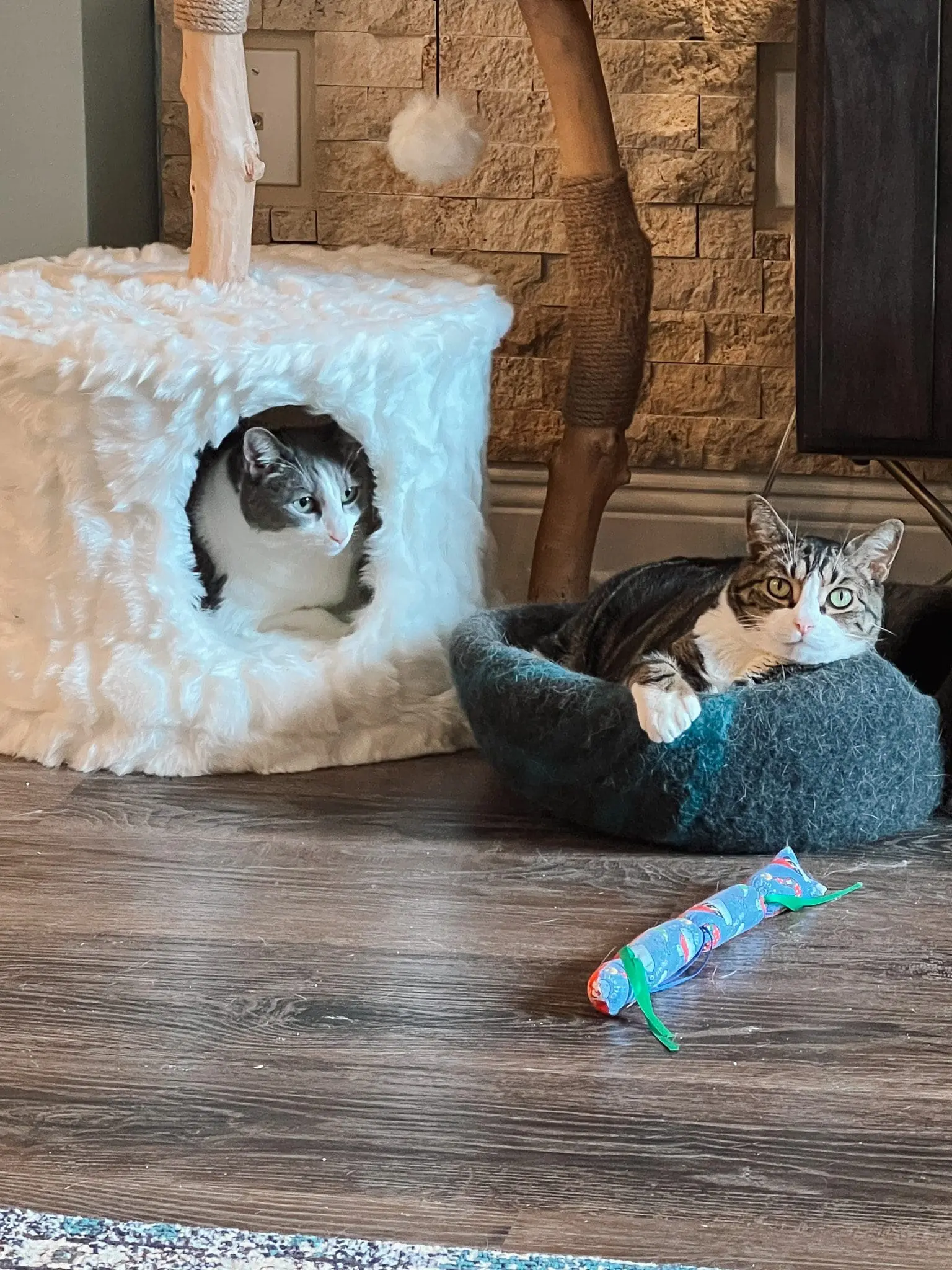
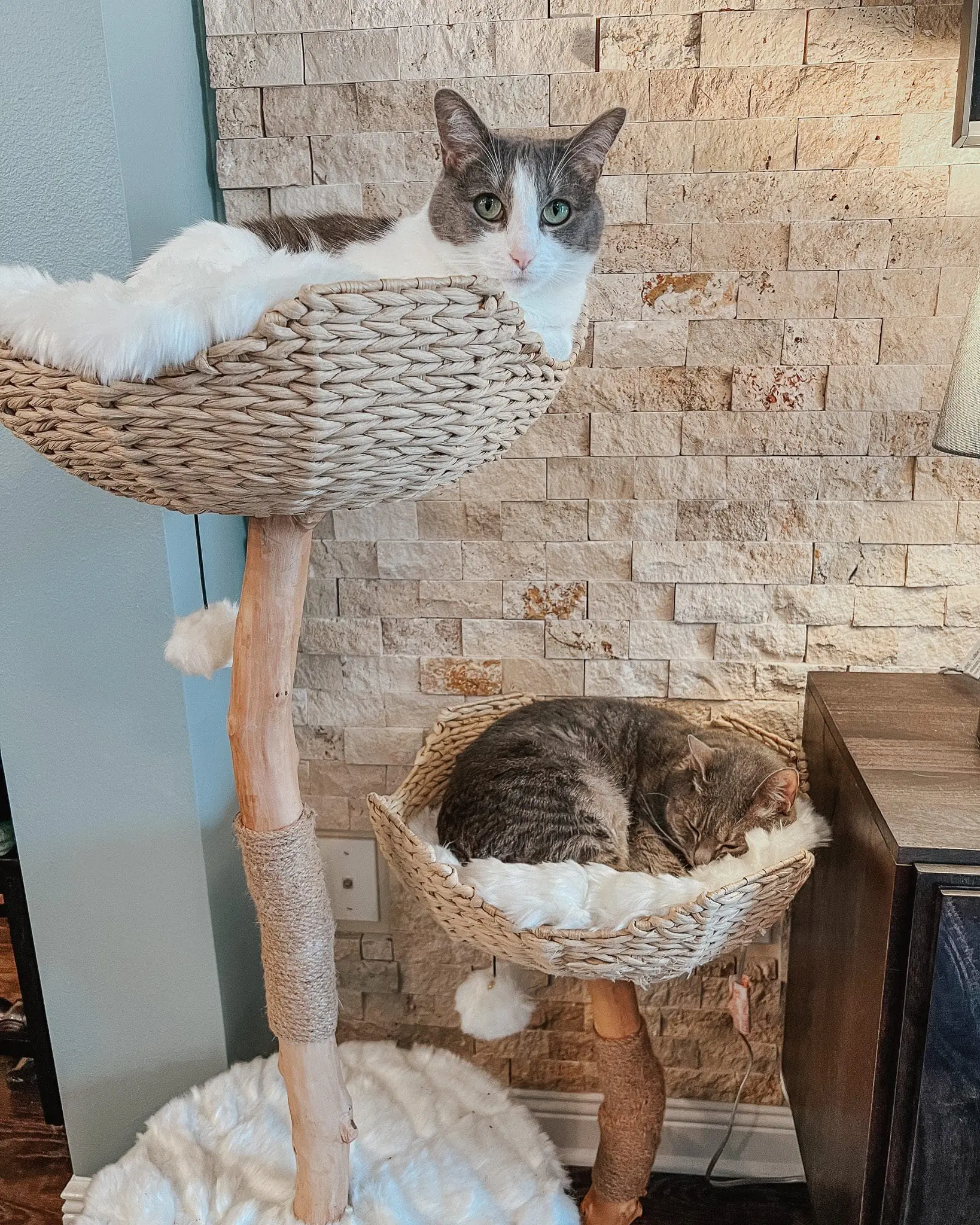
Olivia and Emory, however, were another story.
Introducing Olivia and Emory
I have heard that girl cats can be more difficult than boy cats. I think there might be some truth to that theory — or I just have a really chill boy cat. Olivia and Emory are both a little more high strung and have been this way their entire lives.
Really, I underestimated how difficult it would be to introduce the girls. When I adopted Olivia, my now-husband and I were not yet living together so Emory really only came over for a few hours at a time or a weekend at maximum. Even though there were some hiccups with these shorter visits, I assumed things would be generally ok when we moved in together with the three cats.
I was wrong. Olivia and Emory just clashed. Emory and Louis love to wrestle and play rough. Louis and Olivia wrestle, too. Olivia did NOT — and still doesn’t — want to wrestle with Emory.
Now that they’re more evenly sized, it’s less of a concern, and just more of an annoyance. But, when we first were all living together (about seven years ago now), I did have concerns for Olivia’s safety.
Reintroducing Olivia and Emory
Olivia and Emory’s situation is a little strange because they technically knew each other before living together, so it wasn’t a complete new experience to have them together. However, at our first apartment, we did some work on reintroducing the girls. The process was a lot like introducing an entirely new cat to the bunch.
Cats can be aggressive. They also can be SO LOUD. Besides the concerns about physical safety, cat fights are just plain annoying. I’m flippant about it now because I know Olivia and Emory are wimpy and all talk; they just smack each other with soft paws and make a lot of noise now. But it is something to be concerned about, especially at first.
Techniques and Tips for Introducing A New Cat Into the Home
Step 1. Slowly Introduce the Cats Through Doors
The plainest step we took to reintroduce Olivia and Emory was to keep them separated by a door and let them get re-acclimated to each other’s scents. This was my initial strategy with Louis and Olivia, as well, but it wound up not being really necessary.
Basically, kittens are very small and easily overwhelmed. Introducing a new kitten to the home is going to be a bit stressful for them. To keep track of them and keep them out of trouble, sometimes it’s best to keep them in a bathroom or smaller room for a while until they get a little more mellow in the new home.
While the kitten is in the bathroom or smaller room, keep the adult cat outside of the room. Chances are, the adult cat will want to sniff at the base of the door out of curiosity anyway. Let them sniff each other this way, so they can get used to each other’s scents. This eliminates the concern about any physical aggression and is less stressful for everyone involved.
Step 2. Swap Fabric Items With Each Other’s Scents
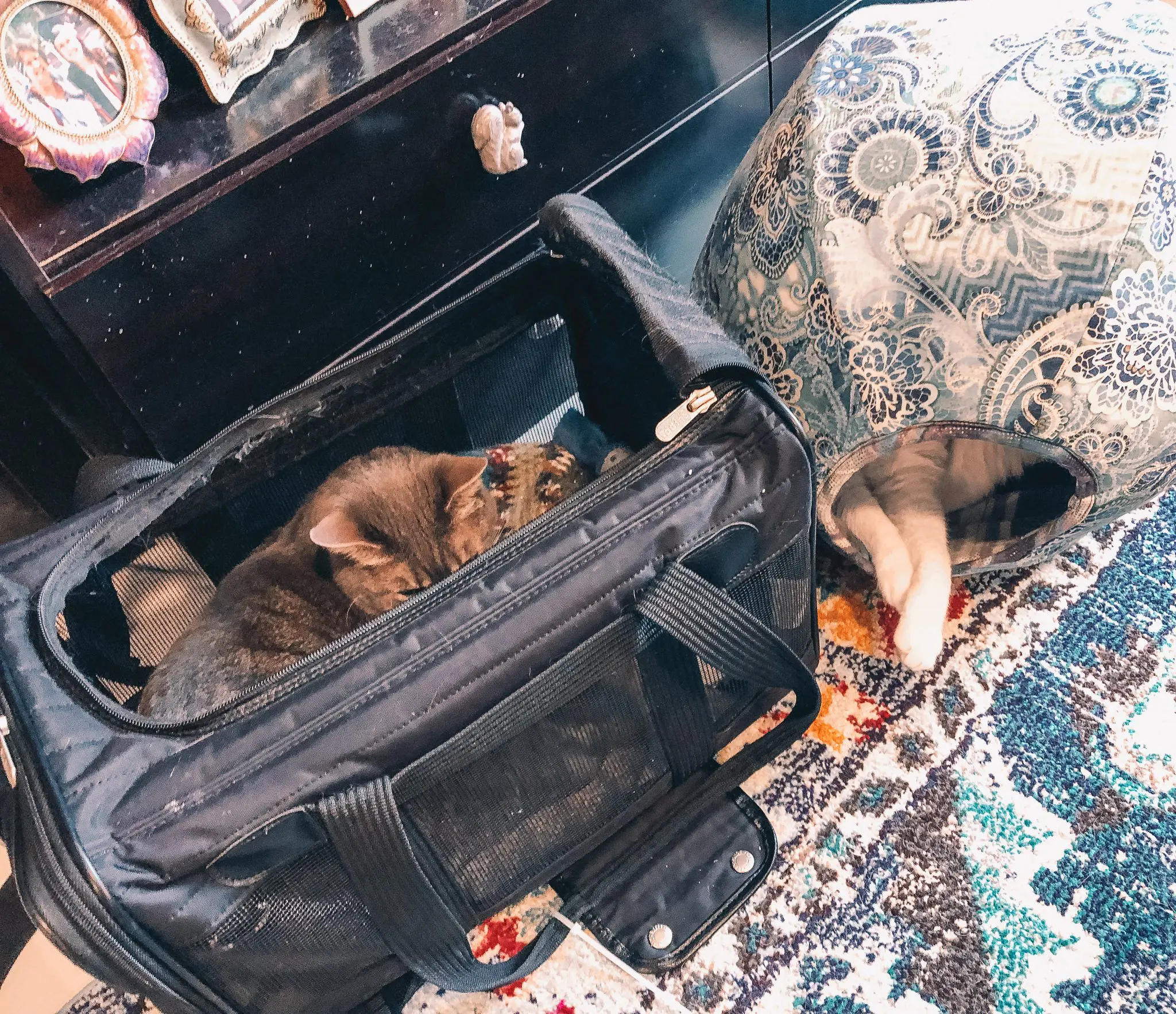
In addition to the door strategy, I swapped Cat Mats between the girls as a way for them to get accustomed to each other’s scent in a low-stress environment.
You can use towels, blankets, clothing items, or whatever else you think would work best for this. Simply give each cat a fabric item for a few days and then swap them.
Put the fabric items where the cats like to hang out most, like on pet beds or cat trees. My cats, for example, love to hang out in their Sherpa carriers (as long as the top is open!), so I put one of the Cat Mats in there.
If you need help figuring out how to make the most comfortable environment for your cats, check out my guide to making your home cat-friendly here.
Step 3. Play with the Cats Simultaneously
This strategy has worked pretty well in our apartment, as long as Louis doesn’t take over the game.
Basically, engage your adult cat and new kitten with a teaser toy or something similar. They can watch each other play and get a better feel for each other with the distraction of the toy. The goal is to create a “high value” experience that allows the two cats to see each other and experience each other without immediately going into stare-down/take-down mode.
Step 4. Feed the Cats Separately
Food aggression can be an issue with pets, generally. It think the risk of this is higher with rescue animals, oftentimes, since you may not know the pet’s whole backstory (IE: were they a hungry stray for a while? Did this affect their attitude towards food?).
Keeping feeding spaces separate will eliminate concerns surrounding food aggression and stress in cat introductions. Jason Galaxy suggests feeding the cats on either side of a closed door, so as to create a positive association between the kitten and adult cat in a low-stress environment.
For the record, I still typically feed Olivia and Emory separately. Sometimes, I’ve noticed that Olivia acts intimidated if Emory approaches her while she’s eating, even if Emory isn’t going after Olivia’s food. While they’re not separated by doors or even rooms, I am careful to put their wet food bowls a few feet from each other. (Side note: this also helps keep Louis from overeating and taking over the girls’ food bowls.)
Step 5. Enlist the Help of Cat Pheromones with Feliway
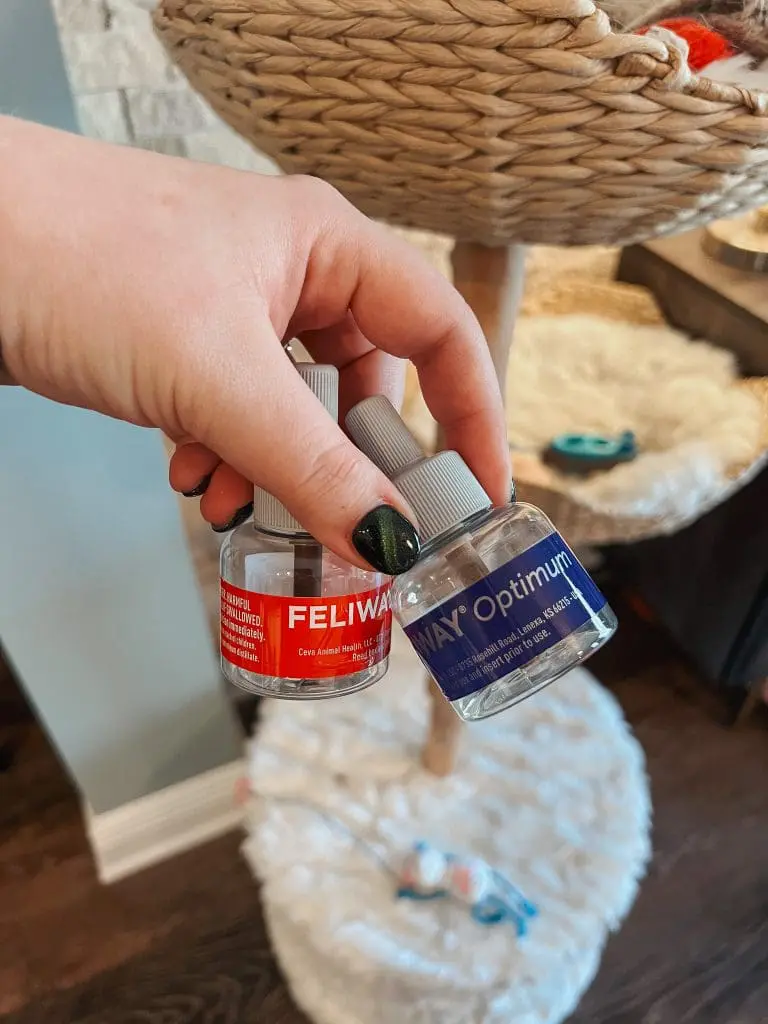
I swear by Feliway. Feliway is a vet-recommended and drug-free option for mellowing your feline friend.
The pheromones create an “odorless copy of [cats’] facial pheromone which helps cats feel more comfortable in their environment.”
You can pick up a diffuser of the pheromones or a spray bottle; I’ve had good experiences with both. We mostly use the diffusers now, and have them strategically spaced throughout our house.
You can order Feliway from both Amazon and Chewy.
Curious about cat pheromones and how they can potentially help with cat behavior issues?
Read my full post about how Feliway works here!
Step 6. Lastly, Be Patient When Introducing a New Kitten and Cat
Cats are amazing little creatures, but they can really test your resolve. Introducing a new kitten to an older cat — especially two older cats — can be very trying. These things take time and patience. It’s not a perfect, linear process and you may need to accept the fact that the kitten and adult cat will never be besties (IE: Olivia and Emory). If this is the case, it does not mean you can’t have an otherwise harmonious home. Olivia and Emory may not snuggle like they do with Louis, and we may still have to use a squirt bottle from time to time because they get into spats, but 90% of the time, everything’s fine. And that’s pretty great.
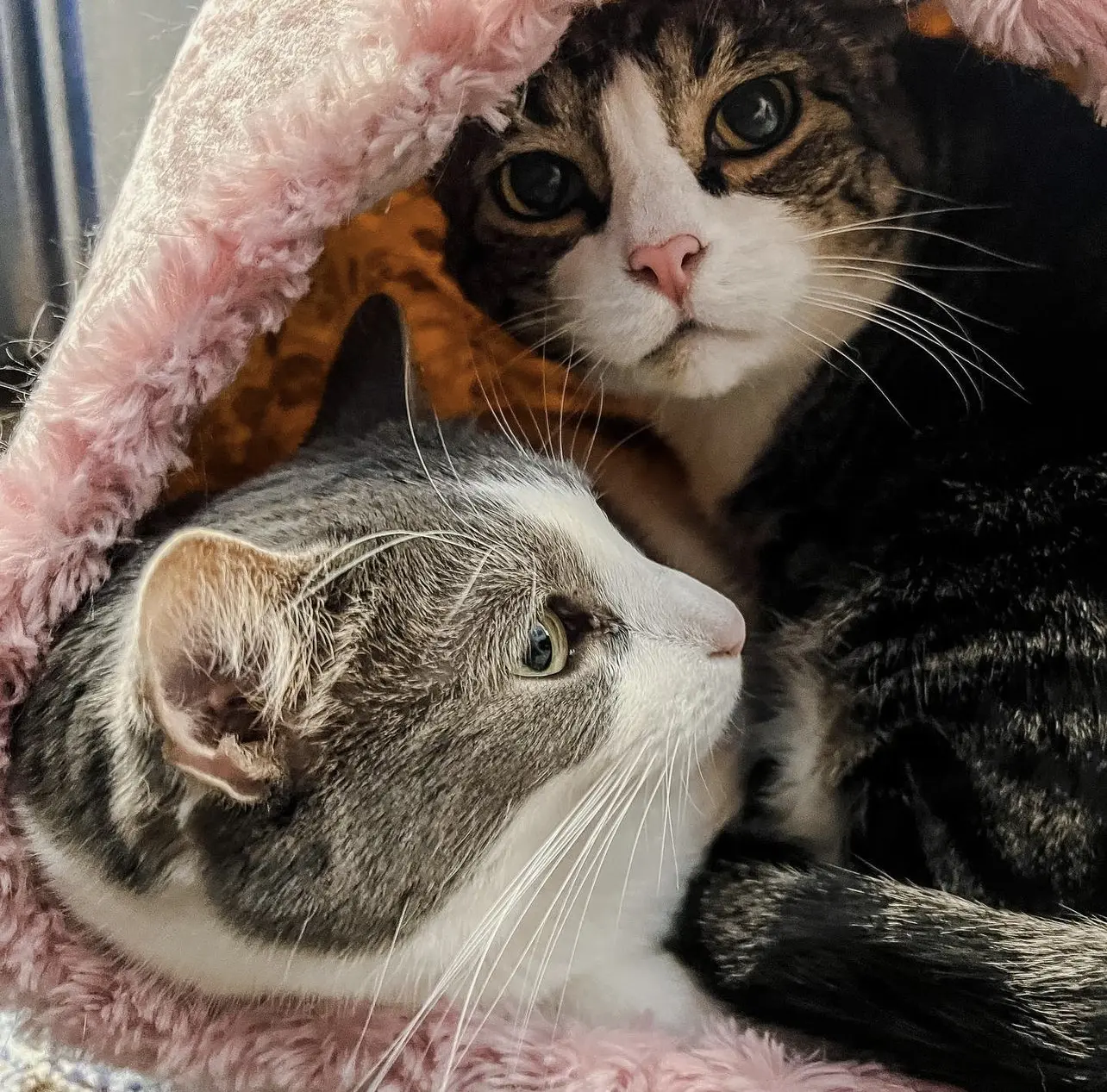


In the long run, I think maintaining a cool and calm demeanor helps the whole process of introducing a new kitten to older cats. Cats are pretty intuitive and can sense when their owners are stressed. If they think you’re anxious about something, chances are they’ll get worried, too. Try to keep calm when introducing a new kitten and recognize that the process might not be as linear as you would have hoped. It’ll be worth it, though!
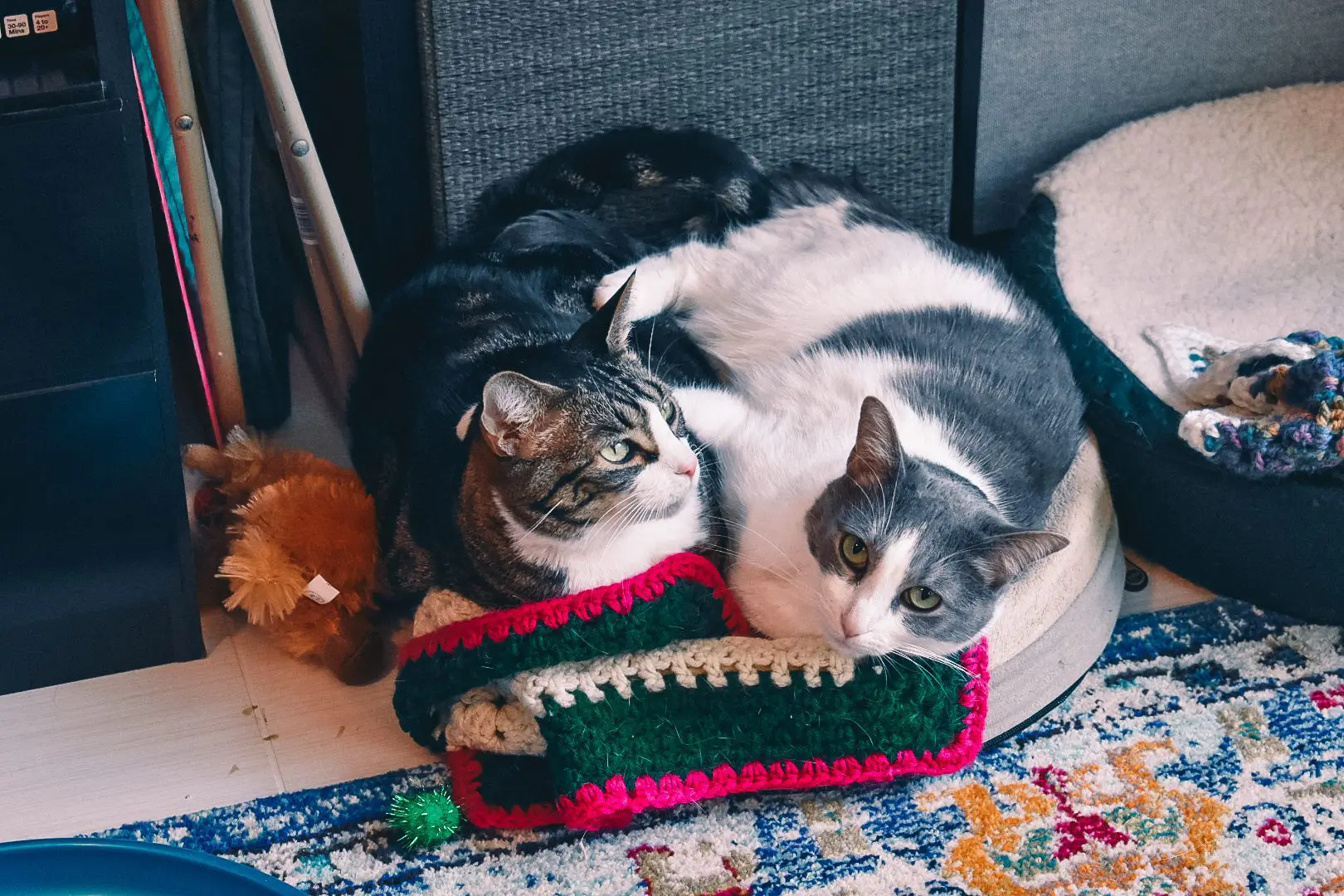
Have you tried any of these tactics for introducing a new kitten to your adult cats?
Do you have any other new kitten advice that might help fellow cat moms better understand cat behavior issues?
Share your wisdom and experiences in the comments below!

Sometimes, sharing litter boxes can cause stress amongst cats.
The Litter-Robot 4 eliminates the chance for conflict thanks to its automatic cleaning cycles. Plus, it’s designed for households with up to four cats!
Learn more about why I love the automatic Litter-Robot for my cats and get a discount on a bundle of your own here!
Read the Latest in Cat Mom Life:
- Hurricane Pet Preparedness: A Cat Owner’s Full Guide
- The Cat Mom Life Cat Care Guide: Tips for New Cat Owners
- How to Cut Your Cat’s Nails Without Splitting the Nail
- The Litter-Robot 4: Why I Love This Automatic Litter Box
- The Best Cat Carrier: The Sherpa Original Deluxe Pet Carrier
*This post was originally published on May 6, 2020. The most recent update to this page was on April 15, 2025.


